


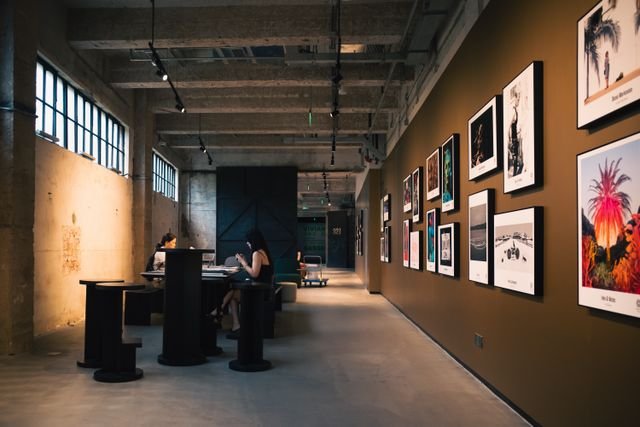

We can see more art in ten minutes online than previous generations might have encountered in months. Social media, digital portfolios and virtual exhibitions have made creative work easier to discover than ever, which is undoubtedly a good thing. But the ease of scrolling has also changed the way we experience art. Images are consumed quickly, often on small screens, surrounded by notifications and competing content.
That’s part of why physical spaces such as SoHigh Gallery still matter. Independent galleries give artists somewhere to show work in a setting designed for attention rather than distraction, while audiences get the chance to encounter scale, texture and detail in person. In an increasingly digital creative world, that physical experience can feel more valuable, not less.
Seeing Art in Person Changes the Experience
A photograph of an artwork can be useful, but it can’t reproduce everything.
Scale is one obvious example. A large painting viewed on a phone becomes the same size as everything else on the screen. Texture disappears, surface detail is flattened and the relationship between the artwork and the room is lost.
Sculpture and installation work suffer even more online because their physical presence is part of the experience. You need to move around them, notice how they occupy space and see how light changes across different surfaces.
Independent galleries provide that context. They let people slow down and look properly instead of flicking past an image in two seconds.
Small Spaces Can Take Bigger Creative Risks
Larger institutions often work with long planning cycles, substantial budgets and established programming structures. Independent galleries can sometimes move more freely.
They may show emerging artists, experimental work or exhibitions that don’t fit neatly into commercial categories. That flexibility can create space for ideas that are still developing rather than waiting until an artist already has a large audience or proven market.
This is important because creative scenes need places where people can test work. Not every exhibition has to be polished to the point of predictability. Sometimes the value comes from seeing an artist push into something unfamiliar.
Without those smaller spaces, the cultural landscape can become dominated by work that has already been validated elsewhere.
Galleries Help Artists Build Real-World Momentum
Online visibility can be powerful, but a physical exhibition still carries a different kind of weight.
For an emerging artist, showing work in a gallery can create opportunities to meet curators, collectors, other artists and people working across different creative industries. It also provides practical experience in installing, presenting and discussing work with an audience.
Those interactions are difficult to replicate through a purely digital presence.
An exhibition can become a meeting point where conversations lead to collaborations, commissions or future opportunities. Even when nothing immediate comes from it, being part of an active gallery environment helps artists become more connected to a wider creative community.
They Give Audiences Permission to Slow Down
One of the biggest differences between a gallery and a digital feed is the pace.
Online platforms are designed to keep people moving. You see one image, then another, then another. Even when something catches your attention, the temptation to continue scrolling is always there.
A gallery removes much of that pressure. There may only be a handful of works in the room, which encourages you to spend more time with each one.
That slower experience can change how people respond to art. Something that seems unremarkable at first glance may become more interesting after a few minutes. Details emerge, relationships between works become clearer and the exhibition begins to feel like a complete idea rather than a collection of isolated images.
Independent Galleries Can Feel More Approachable
Large galleries and museums can sometimes feel intimidating, particularly for people who don’t consider themselves “art people.”
Independent spaces often have a different atmosphere. Exhibitions can feel more informal, openings may be conversational and there’s often a greater chance of speaking directly with artists or people involved in the show.
That accessibility matters because contemporary art can already seem difficult from the outside. People may worry that they’re supposed to understand a particular reference or have the “correct” interpretation.
Smaller spaces can make it easier to engage without that pressure. You can like something, dislike it or simply find it strange. The important thing is that you’re actually responding to it.
Local Creative Scenes Need Physical Anchors
Cities need places where creative communities can gather.
Studios, rehearsal spaces, independent cinemas, galleries and small venues all provide points of connection that digital platforms can’t fully replace. They give creative people reasons to leave their individual workspaces and encounter one another.
That matters because cultural communities don’t grow through content alone. They grow through repeated interaction.
An artist might meet a designer at an exhibition opening, a photographer might discover a new collaborator and a visitor who came in casually might start paying more attention to local art. Those small interactions build a scene over time.
Without physical gathering points, creative communities can become fragmented even if everyone remains active online.
The Space Itself Can Become Part of the Work
Independent galleries often occupy interesting buildings: converted warehouses, upstairs rooms, former shops or unconventional commercial spaces.
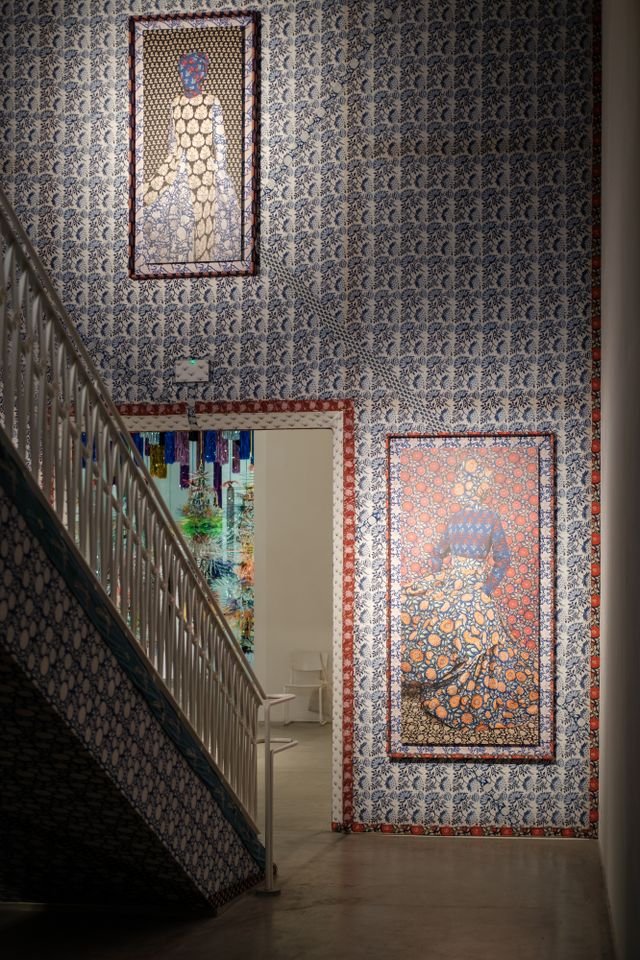
That architecture can influence how exhibitions are experienced. Artists may respond directly to the room, using its scale, light or unusual features as part of the presentation.
This creates something that cannot simply be transferred online because the work and the environment are connected.
For visitors, it also adds another layer to the experience. You’re not just looking at individual pieces; you’re moving through a carefully considered relationship between artwork and space.
Digital and Physical Don’t Need to Compete
It would be a mistake to treat galleries and digital platforms as opposites.
Online tools have made it much easier for artists to reach audiences, promote exhibitions and maintain visibility beyond the physical limits of one city. A gallery show can now continue to circulate online long after the exhibition closes.
The strongest creative ecosystems often use both.
Digital platforms help people discover the work. Physical spaces give them somewhere to experience it properly. One creates reach while the other creates depth.
That combination can be far more powerful than relying exclusively on either format.
The Value of a Gallery Is in What Happens Around the Art
An independent gallery is more than a room with things hanging on the walls.
It provides artists with opportunities, audiences with a different way of looking and creative communities with a place to gather. It creates moments that don’t happen through a screen: standing close enough to see brushwork, overhearing a conversation about a piece or unexpectedly discovering an artist you hadn’t encountered before.
Those experiences are difficult to measure, which is perhaps why independent galleries can sometimes seem less essential in a digital age.
But creative culture isn’t built only through reach and engagement statistics. It’s also built through places where people can show up, spend time and encounter something without an algorithm deciding what comes next. That’s why independent galleries still matter — and probably always will.