


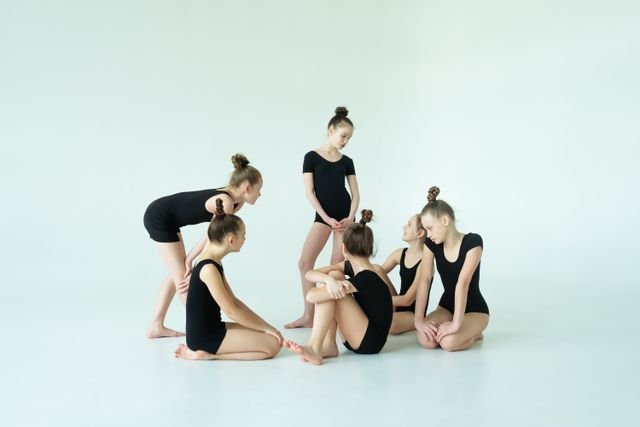

The choreography locked down three months ago, the music is cut, and the dancers have got all their formations down pat. Then the uniforms show up two weeks before competition, and the colour looks dramatically different under studio lights than it did on a tablet screen. Three of the costumes don’t fit properly; the production team is having a nightmare trying to get them adjusted without further delay, but the turnaround time from the supplier is running miles behind and the competition is just weeks away.
It’s not an isolated occurrence, unfortunately. This happens to Aussie dance teams often enough that it’s almost become par for the course. And yet, every time it does happen, you can usually pinpoint the root of the problem right back to a decision made at the very start of the ordering process when choosing sports uniforms suppliers.
“Custom” Means Different Things to Different Suppliers
Before you’ve even started messing about with fabrics and designs, you need to get a straight answer on what “custom” actually means from your chosen supplier. Some companies will happily offer up custom colour choices and logo placement, but that’s about it; the underlying design is fixed and not up for negotiation. Others will start from a blank canvas and let you have as much creative input as you need on the cut, fabric weight, structural elements and any competition-specific requirements that need to be met.
For amateur studios just knocking out some training gear, the difference probably won’t make much of a difference. But for teams competing at the top level, where the judging body has strict rules on things like coverage, fabric opacity and embellishments, it’s a whole different story. So when you’re talking to a supplier, ask yourself: is the silhouette something you can actually change or is it a fixed part of the design? Can they accommodate the specific rules of the competition you’re competing in? Asking those questions right from the start can save a whole lot of headaches down the line.
Fabric Choice is Where Most Teams Get It Wrong
For some reason, people always seem to get the order of operations backwards; they pick the fabric first, and then try to design a costume around it. But with sublimation printing, the process used to get those gorgeous, gradient-style effects that are all the rage in contemporary competitive dancewear, you need to be working with a polyester-based fabric first and foremost. If you pick a fabric because it looks nice or feels nice, but then try to apply a sublimated design on top of it, you’ll end up with a product that just doesn’t look right; the print process just doesn’t work consistently on non-polyester fabrics.
And it’s not just about the print; the performance characteristics of different fabrics can vary wildly, even if they look identical on paper. High compression fabrics can make it nearly impossible to do certain moves, while fabrics with mesh or chiffon panels can look completely different under lighting conditions than you might have anticipated. And then there’s the issue of how well it holds up to heat and repeated washing, a problem that’s a whole lot more serious when you’re competing than when you’re just dressing up for a night out. So get some physical fabric samples in front of you before you start ordering, and make sure you’re checking that the colours hold up to repeated washing; it’s a couple of extra weeks of hassle, but it’s worth it in the long run.
Why Standard Size Charts are a Problem for Dancers?
Garment sizing charts are designed to give you a static measurement, i.e., a measurement that doesn’t change while you’re standing still. But the reality of performing in a dance competition is that you’re not going to be standing still for long; you’ll be moving, stretching, and bending, and that’s exactly when static measurements are going to start to fall short. The armholes, waistband height, and leg opening will all be fine when you’re standing still, but as soon as you start to move, you can be pretty sure that they’ll be all wrong.
The Lead Time Problem That Catches Teams Every Season
6–12 weeks lead time from the approval of designs and fabrics to delivery is a reasonable lead time for true custom manufacturing. Not from the moment the enquiry was made. But from the time when all the decisions on design are taken, fabric is selected and the order is placed.
The factors that add to the lead time include design revision cycles, which are normal and add several days each; fabric approval samples; fit samples if any changes are needed on the design; and production calendar factors including public holidays in the country of manufacturing. The teams that start conversations with suppliers one month before a competition are not ordering custom-made uniforms. They order whatever a supplier can produce within the given time, which is quite different.
What Competition-Ready Dancewear Requires That Training Wear Doesn’t?
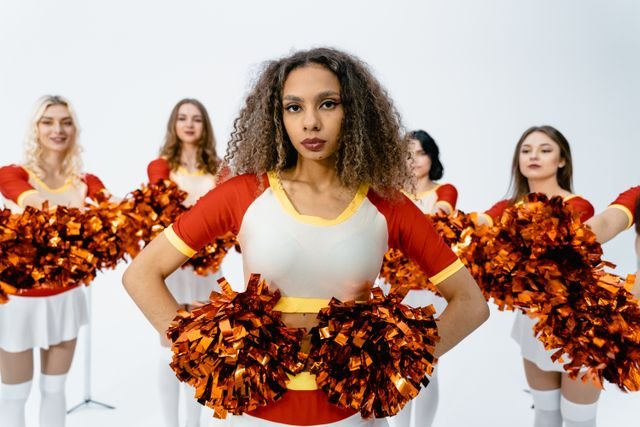
Uniforms meant for competitions have to endure back-to-back competitions through multiple days without getting out of shape, changing colours and losing their structural integrity. High-stress stitching points, waistband elasticity throughout the competition weekend and endurance of decorations through the performance are all important quality factors that aren’t evident from a picture but are immediately noticeable by the second day of the competition.
A uniform that looks perfect at the first performance and visibly worn by the third doesn’t belong to competition-ready uniforms, no matter how great it looks in promotional pictures. Asking specifically about construction standards for competitions, and not general wearing, is what distinguishes a suitable product from others.